Map Pack SEO: How Local Businesses Win the Google Map
September 9, 2026
7 min read
4 views
If you run a local business, the most valuable spot on Google is not position one. It is the map with three business listings that sits above the regular results. That block is the map pack, and for searches like "plumber near me" or "dentist in Anaheim" it takes the majority of clicks and nearly all of the phone calls. Regular SEO can get your website ranked. Map pack SEO gets your business ranked, and the two are decided by different signals.
This guide explains how the map pack works, what actually moves a listing into it, and the order to do the work in if you want calls rather than vanity rankings.
What the Map Pack Is (and Why It Beats Position One)
Search for any local service and you will see a map, three business cards under it, and a "More businesses" link. Each card shows the business name, star rating, review count, category, address or service area, hours, and a call button. On a phone, that block fills the whole screen before anyone sees a website.
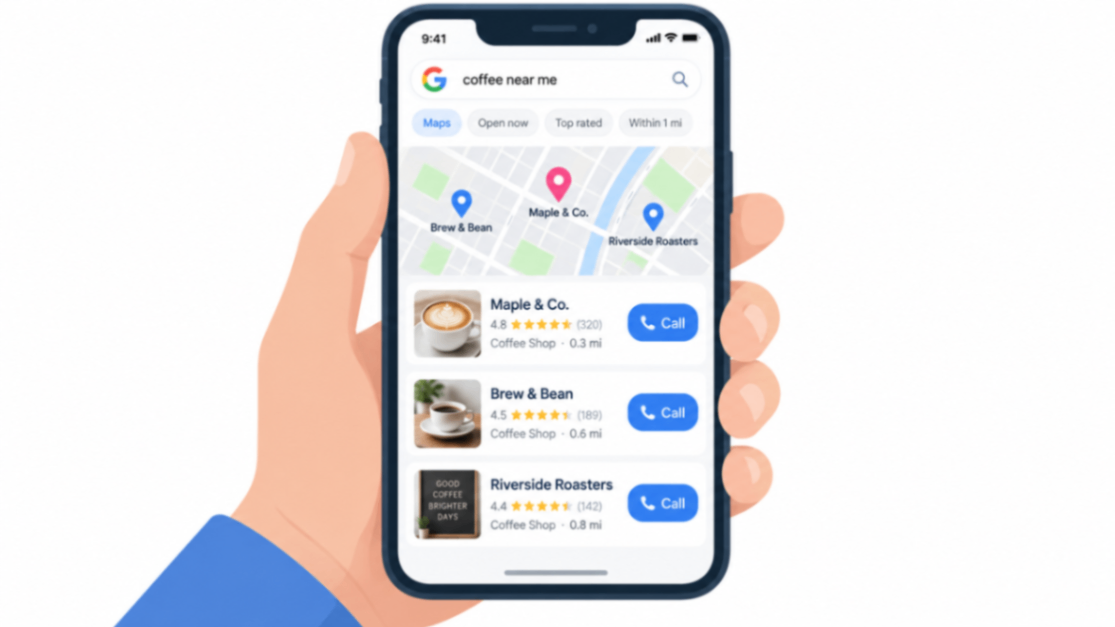
That is why it matters. A traditional organic result asks the searcher to click, load your site, find the phone number, and call. A map pack result puts the call button one tap away. Google also shows the pack for the searches with the highest buying intent: "near me," "open now," "[service] [city]," and "emergency [service]."
Two things make the map pack a separate game from regular SEO:
- It ranks a Google Business Profile, not a web page. Your website matters, but it is one input among many.
- It depends on where the searcher is standing. Two people a mile apart get different packs for the same query. There is no single "rank 1" to chase.
The Three Ranking Factors Google Actually Names
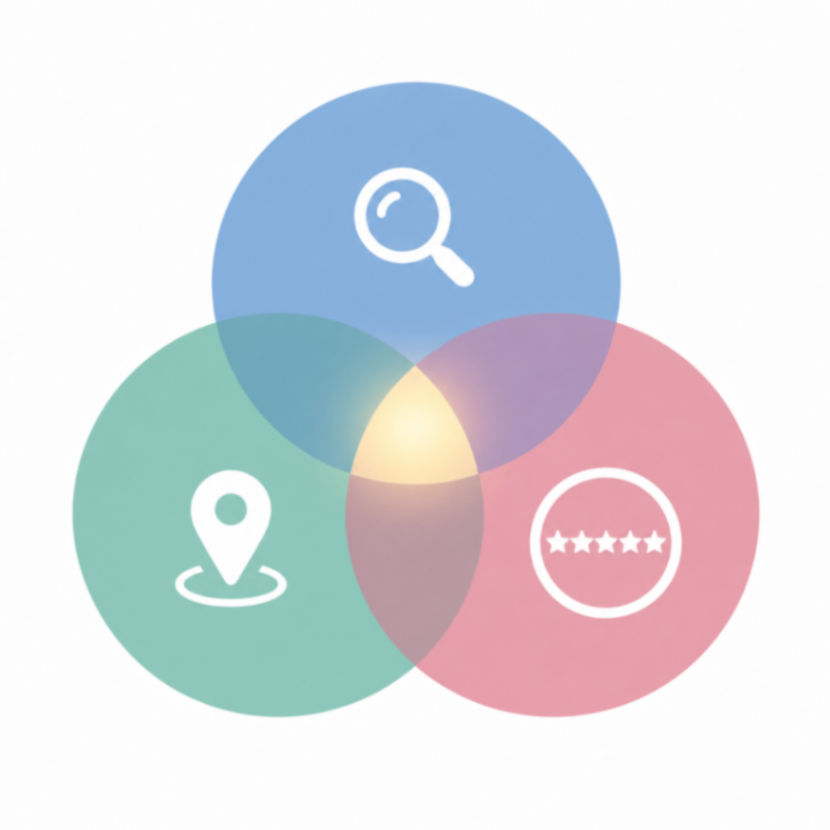
Google is unusually direct about local ranking. It publishes three factors: relevance, distance, and prominence. Everything else you will read about map pack SEO is a tactic that feeds one of those three.
Relevance
Relevance is whether your profile matches what the person typed. Your primary category carries most of this weight. Secondary categories, the services you list, your business description, and the content on your website fill in the rest.
The most common relevance mistake I see is a vague primary category. A company that does HVAC repair and picks "Contractor" is invisible for "AC repair near me." Pick the most specific category that describes what you most want to be called for, then add secondaries for the rest.
Distance
Distance is how far your business is from the searcher, or from the location named in the query. You cannot change where your shop is, but you can control how Google understands your service area.
Storefront businesses should show their address. Service-area businesses that go to the customer should hide the address and set service areas by city or zip. Either way, keep the setting honest. Listing a downtown address you do not occupy is the fastest way to get a profile suspended.
Prominence
Prominence is how well known and well regarded Google believes your business is. Reviews drive most of it: the count, the average rating, how recent they are, and whether you respond. The rest comes from links and mentions of your business across the web, plus consistent name, address, and phone details everywhere your business appears.
This is the factor that separates two profiles with the same category and location. It is also the one most owners neglect because it is slow.
Map Pack SEO vs Regular SEO: What Changes
Regular SEO is about pages. You research keywords, write content, earn links to that content, and rank a URL. Map pack SEO is about an entity. Google is deciding whether your business is the best answer for a person at a specific spot, and it checks signals your web pages barely touch.
Here is how the two compare on the things that matter:
| Regular SEO | Map pack SEO | |
|---|---|---|
| What ranks | A page on your site | Your Google Business Profile |
| Main lever | Content and backlinks | Category, reviews, proximity |
| Location | Same result nationwide | Changes block by block |
| Time to move | Months | Weeks for basics, months for reviews |
| Where the click goes | Your website | A call, directions, or your profile |
They still support each other. Google reads your website to confirm what you do and where you do it, and a strong local page can help your profile rank for a service the category alone does not cover. If you have not built those pages yet, lead generation websites built around your services and cities are the piece that ties the two together.
The Map Pack SEO Checklist, in Order
Do these in sequence. Each step is cheap, and the early ones unlock the later ones.
1. Claim and verify your profile
If you have not claimed your Google Business Profile, nothing else matters. Search your business name, claim the listing, and complete verification. Google may ask for a video walkthrough or a mailed postcard. Do it properly. Unverified profiles do not rank in the pack.
2. Fix the primary category
Choose the single most specific category for your main service. Then add up to nine secondary categories, but only for services you actually offer. Padding categories dilutes relevance and invites suspension.
3. Complete every field
Hours, phone, website, services with descriptions, attributes, and a business description that reads like a human wrote it. Add real photos of your team, your trucks, your storefront, and your work. Profiles with complete data get shown more, and photos give the searcher a reason to trust the listing before they call.
4. Get the website to agree with the profile
Your site should state the same business name, address or service area, and phone number as your profile. It should have a page for each core service and, if you serve multiple cities, a page for each city that says something specific about your work there. Add LocalBusiness structured data so Google can read those details without guessing.
5. Build a review habit
Ask every satisfied customer, the same day, with a direct link. Reply to every review, including the bad ones, in a calm and specific way. A steady flow of a few reviews a week beats a burst of fifty followed by silence. Google notices recency, and so do customers.

6. Clean up citations
Search your business name and phone number. Every directory, social profile, and listing site should show the same details as your profile. Old addresses and a second phone number confuse Google about which business is which.
7. Post and update
Use Google Posts for offers, seasonal services, and project photos. Keep hours current, especially around holidays. Activity is a small signal, but an abandoned profile looks abandoned.
Mistakes That Get Profiles Filtered or Suspended
The map pack is competitive enough that people cut corners. Google has gotten good at catching them, and a suspension can take your profile out of the pack for weeks while you appeal.
- Keyword stuffing the business name. "Anaheim Plumbing Pros Emergency Drain Cleaning" is not your legal name. Google will strip it, and repeat offenders get suspended.
- Fake or bought reviews. They get filtered, and the pattern can flag the whole profile.
- Virtual offices and coworking addresses. If you do not serve customers there, it is not a valid address.
- Multiple profiles for one location. Duplicates split reviews and confuse the algorithm. Merge them.
- Ignoring the proximity filter. If a competitor with fewer reviews outranks you, they are often just closer to the searcher. Check your rankings from several points across your service area before deciding what is broken.
How to Measure Whether It Is Working
Map pack rankings change by location, so a single "we are number 2" report tells you almost nothing. Track your position from a grid of points across your service area and watch the grid fill in over time.
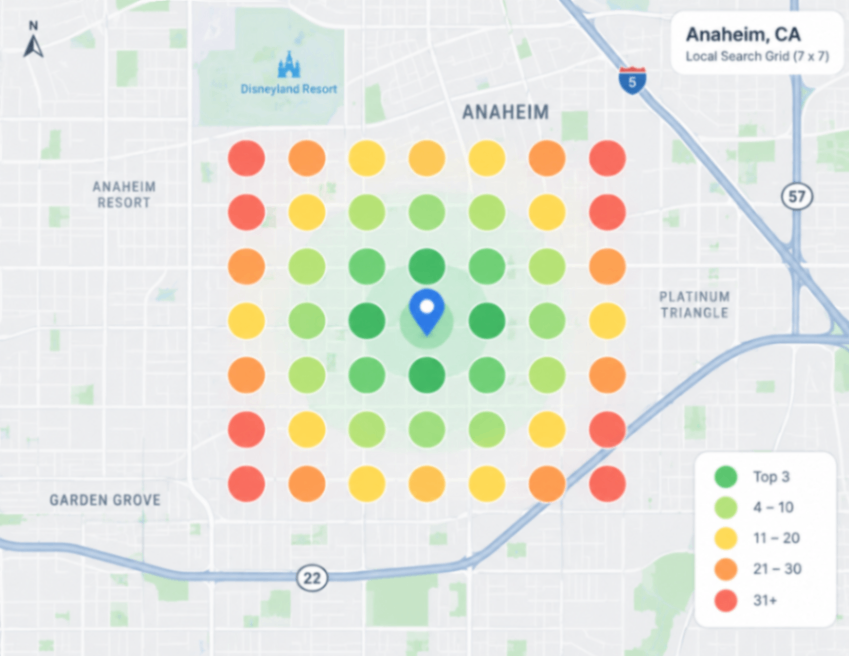 The Google Business Profile dashboard shows calls, direction requests, and website clicks. Those are the numbers that pay the bills.
Give the basics four to six weeks to settle, and give reviews and citations a few months. If the grid is not improving after that, the usual suspects are the primary category, an address or service area setting that does not match reality, or a competitor with a real review advantage.
Where to Start
If you only do one thing this week, open your Google Business Profile and check the primary category. If you do two, ask your last five happy customers for a review. Those two changes move more listings into the map pack than any amount of website tinkering.
Once the profile is solid, the website becomes the next lever, and that is where it makes sense to bring in an engineer. If you want a second set of eyes on your local search setup, reach out and tell me what you searched and what you saw.
Keep reading
Social Media Marketing vs Website: Where to Spend
Social media marketing vs website for local business: why one is rented land and one is owned, which to build first, and how to make them work together.
4 Marketing Channels That Actually Ring Your Phone
Discover the four digital marketing channels that actually produce phone calls for local service businesses, ranked by cost per lead — from Google to paid ads.
Keyword Research for Small Business: Volume Is a Trap
Learn why search volume misleads new sites, how keyword difficulty and intent really work, and how to narrow a broad term into one your small business can win.